25 Aug 2026
Home Improvement
7 min read
Take your garage to the next level with our NEW Smart Opener and Accessories range.
Click here to learn more.
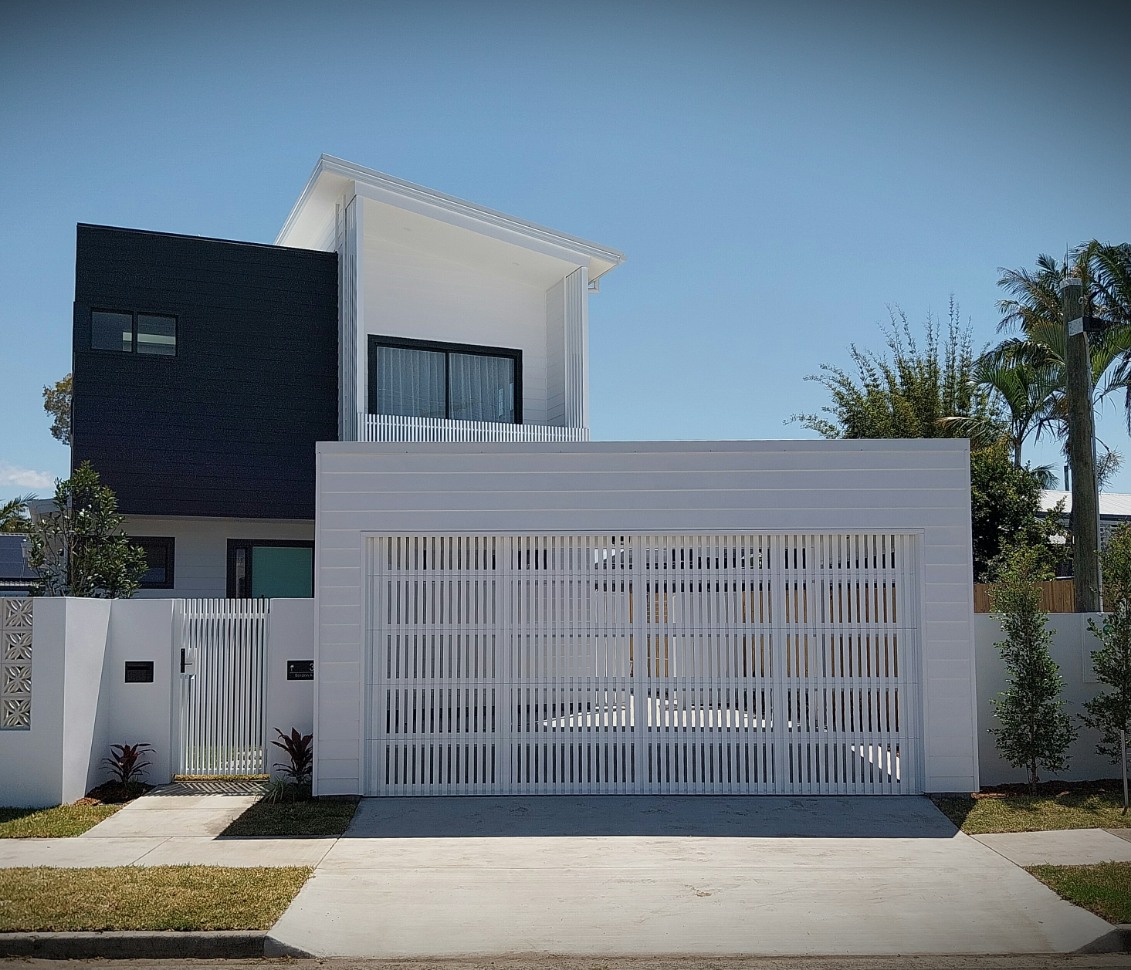
A slatted aluminium garage door tends to suit modern, design-led homes where airflow and natural light matter more than a fully sealed garage. It’s less of a fit if you need full insulation or a garage closed off from dust and view.
Slatted and batten-style doors reflect a newer trend in garage doors, as homeowners, builders and architects move from a plain steel panel toward something with more architecture to it. The right choice depends on the slat setup, what you use the garage for, your climate, and how the garage door sits against your house.
Well suited to: contemporary homes, ventilated garages, coastal-inspired façades and homeowners after a custom architectural feature.
Consider another option when: the garage needs to be tightly sealed, insulated, quiet, or protected from dust and wind-driven debris.
A slatted aluminium garage door is a sectional garage door built from spaced aluminium slats rather than one solid panel. It runs on the same tracks as any other sectional garage door and lifts under the ceiling when open.
Steel-Line’s range of specialty doors includes a Slatted Aluminium Sectional Garage Door with a moderate amount of ventilation, depending on the slat configuration. The finish can be a solid powder-coated colour or a timber-look grain, and it’s different from a Roller Grille, which is typically used in commercial applications rather than homes.
| A slatted aluminium door may suit you when: | Another garage door may suit you better when: |
| Your house has a contemporary or coastal style | The garage is treated as an internal room |
| Your garage gets hot or stuffy | You live somewhere very dusty |
| Airflow matters more than full insulation | Road noise is a concern |
| You want a low-maintenance alternative to timber | You need the garage fully enclosed |
| Some natural light or openness is appealing | Your house is strongly traditional |
Looks matter, but they shouldn’t be the only factor when choosing your garage door.
Slatted doors generally complement contemporary homes, modern minimalist façades, coastal designs and architect-designed houses with matching cladding. A timber-look finish can bring some warmth to a farmhouse style, without the upkeep real timber needs.
That doesn’t rule out more traditional homes. It comes down to whether something on the house ties the garage door back to the exterior, such as cladding or rooflines. Horizontal slats help a wide opening feel grounded, while vertical slats suit a narrower house.
There’s no single right answer. A lighter colour tends to blend in with a pale façade, while a darker colour stands out as a deliberate feature. Compare physical colour samples against your house in natural light before deciding.
The right door depends on what happens behind it, whether that’s parking, a workshop, or a carport that needs shelter.
| Garage use | Likely suitability | Main advantage | Main caution |
| Everyday car parking | High | Airflow and a modern aesthetic | Consider visibility and weather exposure |
| Workshop | High to moderate | Air movement and daylight | Noise can travel through |
| Attached garage | Moderate | Airflow may reduce trapped heat | Consider sealing to the home |
| Coastal home | Potentially high | Aluminium resists corrosion well | Powder coating still needs cleaning |
An onsite assessment with a Steel-Line consultant is the easiest way to match the door to your space.
More open slats mean more airflow, light and a lighter look. But they also let in more dust, noise and insects, and make the garage more visible from outside, especially at night with lights on.
Privacy comes down to viewing angle, distance from the footpath, and slat spacing. If privacy matters, ask about solid backing or a different door style. How enclosed the garage feels also depends on the frame construction, locking system, and opener. Your local consultant can talk you through the features available.
Aluminium resists corrosion better than steel or untreated timber, but that doesn’t mean maintenance-free. Rinse off salt regularly and choose the right powder-coat system for your exposure. The surface also dents more easily than steel, so raise this with your consultant in exposed spots.
Air movement helps a garage feel less stagnant, but a slatted design doesn’t actively cool anything. Choose the slat spacing based on your local climate rather than assuming airflow alone will cool the garage.”
Open slats aren’t the right fit if keeping dust out is a priority. Don’t assume a standard slatted door meets bushfire or cyclone requirements, since that depends on the exact model. Confirm with a local consultant or certifier.
Aluminium is lighter than timber or steel, putting less strain on the motor, so the opener tends to last longer too. Looking after the slats is simple: rinse off dust and salt, use a mild detergent with a soft brush, and check occasionally for scratches.
How long a door lasts depends on exposure, upkeep and use, so ask your consultant rather than a generic figure. Some homeowners choose aluminium over steel doors since steel is heavier on the opener and more prone to rust near the coast.
Tracks, hinges, rollers and the opener need regular attention, so servicing keeps things running well. Steel-Line’s specialty doors pair with automatic openers and features including obstruction-detection beams, smart controls and battery backup, though door weight and headroom need checking first, especially with limited headroom to work with.
Compared with other types of garage doors, here’s roughly how a slatted design stacks up.
| Door type | Airflow | Privacy | Insulation potential | Best suited to |
| Slatted aluminium sectional | Partial, varies by design | Low to moderate | None, slatted designs are intentionally open | Modern homes wanting controlled airflow |
| Aluminium louvre sectional | Moderate | Moderate to high | Limited | Homes wanting more screening |
| Solid sectional door | No intentional flow-through | High | Insulated options may be available | Attached garages and storage |
| Roller Door | No intentional flow-through | High | Product-dependent | Practical, space-conscious garages |
Start with what matters most: airflow, privacy, weather exclusion, light, insulation, appearance or budget. Then look at your level of openness, how the finish complements your house, and details like opening size, headroom and automation.
A slatted door is generally a bigger investment than a standard steel sectional door, but can offer good value if style and airflow matter to you. A solid steel door with insulation may be better if budget is the driver.
A slatted aluminium garage door may be the best choice for homeowners after an architectural look, some airflow, and a material that’s easy to look after. It ticks the box for parking, a workshop, or anything else that benefits from ventilation.
A fully enclosed or insulated door is probably the better choice if the garage needs to be sealed, kept quiet or protected from dust and significant temperature changes.
See how the design looks on your house with the Garage Door Visualiser, or arrange a free measure and quote to speak with a Steel-Line consultant.
How much airflow does a slatted aluminium garage door allow?
It depends on the slat spacing and configuration. Confirm the detail with a Steel-Line consultant for the model you want.
Do slatted garage doors keep out rain, dust and insects?
Not as well as a fully enclosed door. The gaps between the slats allow more airflow and light, but they also leave the garage more exposed to wind-driven rain, dust and insects.
What is the difference between a slatted, batten and louvre garage door?
A slatted door uses spaced, linear slats to create an open, flow-through look. A batten door uses horizontal or vertical battens, sometimes installed over a continuous backing panel. A louvre door uses angled blades to balance airflow, light and privacy.
Discover the perfect door for your home and enjoy peace of mind with the experts in garage doors.