24 Feb 2026
Home Improvement
7 min read
Take your garage to the next level with our NEW Smart Opener and Accessories range.
Click here to learn more.
A garage door that fails to open when you need it most is more than an inconvenience; it can be a clear indication that something isn't working as it should. Spring failure is one of the most common reasons garage doors stop working, which makes choosing the correct replacement essential for longevity and reliable operation.
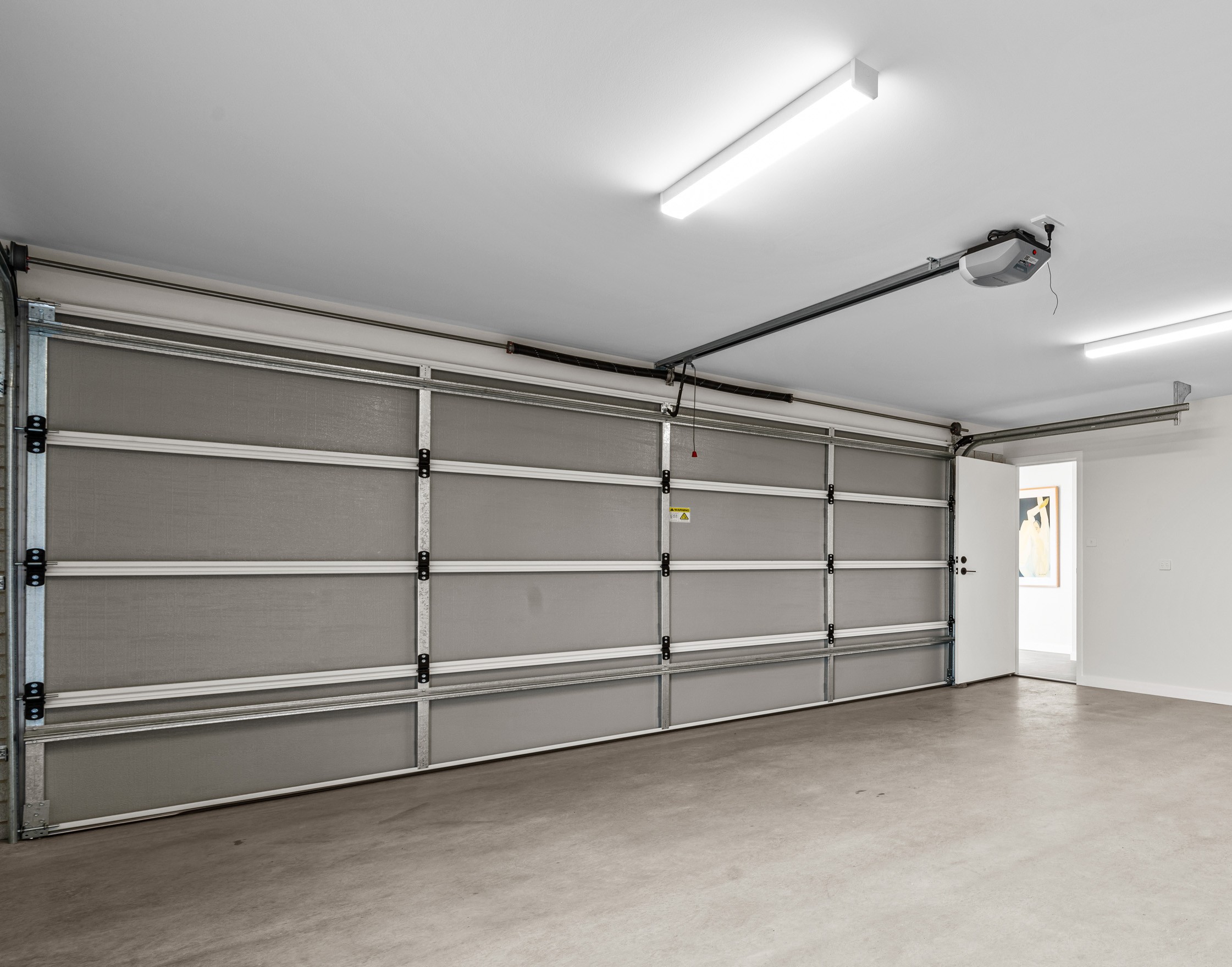
In Australia, most residential garage doors use one of two spring systems. You can usually tell which type your door uses with a quick visual check:
While both torsion and extension spring systems are commonly used in Australia, the spring type is determined by the garage door design rather than homeowner preference. At Steel-Line, torsion springs are used on sectional garage doors, while extension springs are used on tilt garage doors. In this article, we explain how torsion and extension springs work, outline their advantages and limitations, and clarify which spring system is used for different garage door types.
Garage door springs counterbalance the heavy weight of the door. Without a spring for leverage, most garage doors would be almost impossible to lift manually, or your automatic opener would burn out trying.
They work by storing mechanical energy when the door lowers and then releasing it to help lift the door smoothly when it opens. This engineering makes springs vitalto the entire system’s operation.
In Australian conditions, most garage door springs have an average lifespan of 7–12 years depending on use and climate. Their longevity is often measured in cycles (one open and close) with standard residential springs typically rated for 10,000–20,000 cycles (though premium options can last significantly longer).
When springs wear out, you'll usually notice early warning signs. The door becomes heavy, unbalanced, and noisy. You'll definitely know something's not right when it eventually stops working altogether.
Let’s first look at torsion springs, the most common system used on modern Australian garage doors.
Torsion springs sit above the garage door. They twist as the garage door closes, resisting the torque and storing the energy. That stored energy is then released to lift the door smoothly as it opens. Torsion springs can be installed as single or dual systems, depending on door size and weight.
Advantages of torsion springs
Torsion springs are generally considered the premium option, and for good reason. They have a longer lifespan (often 15,000–20,000 cycles vs ~10,000 for many extension springs), offer smoother and quieter door operation and excellent balance and control. Torsion springs also place less strain on the opener and door hardware.
Disadvantages of torsion springs
Despite all these benefits, there are some disadvantages to torsion springs. They generally have a higher upfront cost, are more complex to install and require enough headroom above the door to be fitted correctly.
In summary, torsion springs are an ideal choice for insulated or heavier garage doors commonly used in Australian homes, particularly Sectional Garage Doors or wider double-door setups where smooth operation and longevity are priorities.
So, how do extension springs differ from torsion systems? In simple terms, where torsion springs twist to lift the door, extension springs stretch.
Extension springs work by storing energy when they are stretched and releasing it when they return to their original shape. They are mounted vertically along either side of the door tracks, installed in pairs and extend when the door closes and contract as it opens. Safety cables are essential, preventing springs from snapping loose if they break.
Advantages of extension springs
While not as advanced as torsion systems, extension springs still have several benefits. They are typically less expensive than torsion springs installation is simpler and quicker than torsion systems, but still requires professional installation, and they're ideal for garages with limited headroom above the door.
Disadvantages of extension springs
Homeowners should also be aware of the limitations of extension springs. They have a shorter lifespan (usually around 10,000–15,000 cycles, depending on quality and usage), resulting in more frequent replacement. They also require more components, increasing the complexity and potential points of failure and tend to be noisier than torsion springs.
Extension springs are generally suitable for lighter, non-insulated garage door systems.
The table below compares torsion and extension springs side by side, making it easier to see which system suits different garage door types and usage needs.
| Feature | Torsion Springs | Extension Springs |
| Lifespan & Durability | 15,000–20,000 cycles; more resistant to wear; performs well in Australian heat and humidity | 10,000–15,000 cycles; can degrade faster in coastal humidity; more frequent replacements |
| Cost Analysis | Higher upfront cost; longer-term value; fewer replacements needed over 10+ years | Lower initial cost; more frequent replacement may offset savings; shorter ROI timeline |
| Performance & Noise | Smooth, quiet operation; precise balance; less wear on door/opener | Noisier during operation; less precise balance; may increase opener wear over time |
| Installation Requirements | Requires 10–12 inches of headroom above door; professional installation recommended; more complex setup | Works in limited headroom garages; simpler design; professional installation still required |
Note: The spring system used is determined by the garage door type rather than personal preference.
Torsion springs (Sectional Garage Doors):
If you have a sectional garage door, torsion springs are the correct and recommended system. They are ideal for insulated or wider doors where smooth, quiet operation and long-term durability are priorities, provided adequate headroom is available.
Extension springs (Tilt Garage Doors):
If you have a tilt garage door with a single, lightweight panel and limited headroom, extension springs are the appropriate system. They offer a practical and cost-effective solution for this door type.
Special considerations for Australian homes:
There are some extra considerations for our unique climate and conditions. Coastal corrosion (stainless options), heat expansion in northern regions, typical garage door weights/sizes, and local building code compliance all play a role.
If your garage door suddenly won’t open and your vehicle is trapped inside, worn or broken springs are often the cause. In many cases, however, garage door springs show warning signs before complete failure occurs. These include:
At the first sign of any of these issues, call a professional for assessment to prevent further damage. You can also learn more about upgrading your garage door system to improve reliability and performance.
Garage door springs are under extreme tension; never attempt DIY replacement. Professional installation is a must. Experts ensure proper sizing, balance, and use of specialised tools, protecting your warranty and extending spring life.
For peace of mind, contact Steel-Line for a free quote or inspection and benefit from our decades of Australian-wide experience.
Are extension springs better than torsion springs?
Extension springs are generally cheaper and simpler, but torsion springs offer longer lifespan and smoother operation.
How to select the right torsion spring for garage door?
Selecting the right torsion spring depends on your door’s weight, height, width and required cycle rating. This should always be done with professional guidance.
What is the best spring system for a garage door?
To replace garage door springs, torsion springs are typically the best system for most modern garage doors, especially heavy or insulated doors.
What is the difference between torsion spring cables and extension spring cables?
Torsion spring cables work with springs above the door, while extension spring cables run alongside the tracks and often include safety cables, offering simpler but less precise tension and operation.
Discover the perfect door for your home and enjoy peace of mind with the experts in garage doors.