24 Nov 2026
Home Improvement
12 min read
Christmas & New Year Closure:
Closing 23 December 2026 at 12 pm. Reopening 11 January 2027.
Click here for the After-Hours contacts.
No single garage door design will outperform every other option. The right choice complements your home’s feel, aesthetic, and architectural style rather than competing with it.
While a garage door can certainly become a standout feature, the most important thing is choosing a design that works with your house and for your everyday life. Consider your garage size, the type of opening mechanism, how often you use the garage, and how well the door functions in your space.
You’ll also need to consider the Australian climate. Your garage door needs to be durable enough to handle your area’s conditions, whether that means intense sun, coastal air, humidity, heavy rain, or changing temperatures.
In this guide, we’ll explore these factors in more detail, along with 20 garage door design ideas to help you find the right option for your home.
Ultimately, a well-designed garage door can do much more than improve street appeal. It can complement your home’s architecture, potentially add value to your property, and make everyday life more convenient. With the right design, a garage can be more than a cold, dusty place to park a car; it can be a brighter, more practical, easier-to-maintain space for storage, hobbies, a workshop, or even an additional functional area.
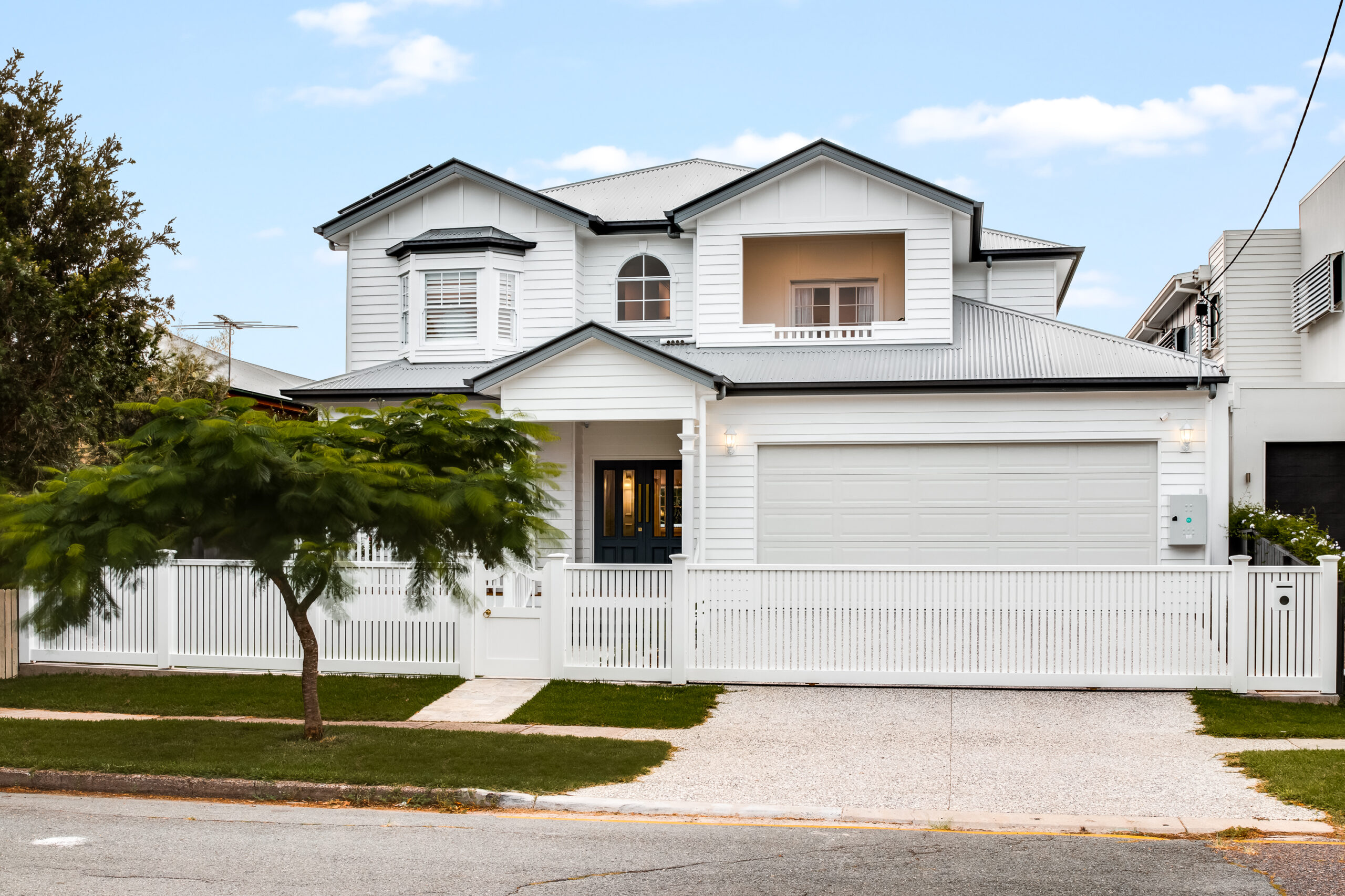
Try matching a colour already on your home’s exterior, and let its architecture set the style. Trends come and go, and unless your home is going to undergo renovations, your house doesn’t change with them.
1 - Pick a colour already on your house. The roofline, the window trims, the brickwork, or the front door. If your roof is a charcoal grey like Colorbond Monument or a warm red-brown like Colorbond Manor Red, echoing that tone on the garage door ties the whole façade together. A contrasting front door can still work as an accent. Just avoid a third, unrelated colour in the mix.
2 - Let your home’s architecture lead the style. A flat, minimal panel tends to look good on contemporary or industrial-style homes. A Hamptons-style build or a heritage Queenslander usually reads better with a traditional profile or a timber-look finish. Check your window frames and roofline first: they signal which direction to go.
3 - Remember how much of your façade this decision covers. In many homes, especially those with a double garage facing the street, the door is one of the largest single design elements on the whole exterior. A design that complements the house tends to age better than one bold statement piece.
4 - Plan your accessories at the same time as your door. Window placement, insulation, and opener choice are all easier to build into the original design than to retrofit later. If you know you want app control or a particular window pattern, raise it at the design stage. A free measure and quote with Steel Line Garage Doors covers sizing, materials, and accessories together, so nothing gets bolted on as an afterthought.
Australian homes generally choose between three door mechanisms: Roller Door, Sectional Door, and Tilt Door. Most are built in Colorbond steel as standard, with aluminium, timber-look and acrylic options depending on the finish. The right mechanism depends as much on your garage’s depth and headroom as it does on your taste.
5 - Roller Door. A continuous curtain that rolls up into a compact drum above the opening. The door does require space above the opening to roll up, but it’s a practical option for narrower driveways or garages where every centimetre of depth is already spoken for.
6 - Sectional Door. Built from rigid, hinged panels that travel back along a track under the ceiling. Sectional Doors give a neat, uniform look across a wide opening, which is why they’re a common choice for double garages and newer builds.
7 - Tilt Door. A single solid panel that tilts up and rests flat under the ceiling. It works for garages with limited headroom and tends to appear on more traditional home designs, where a single unbroken panel reads simpler than a sectioned one.
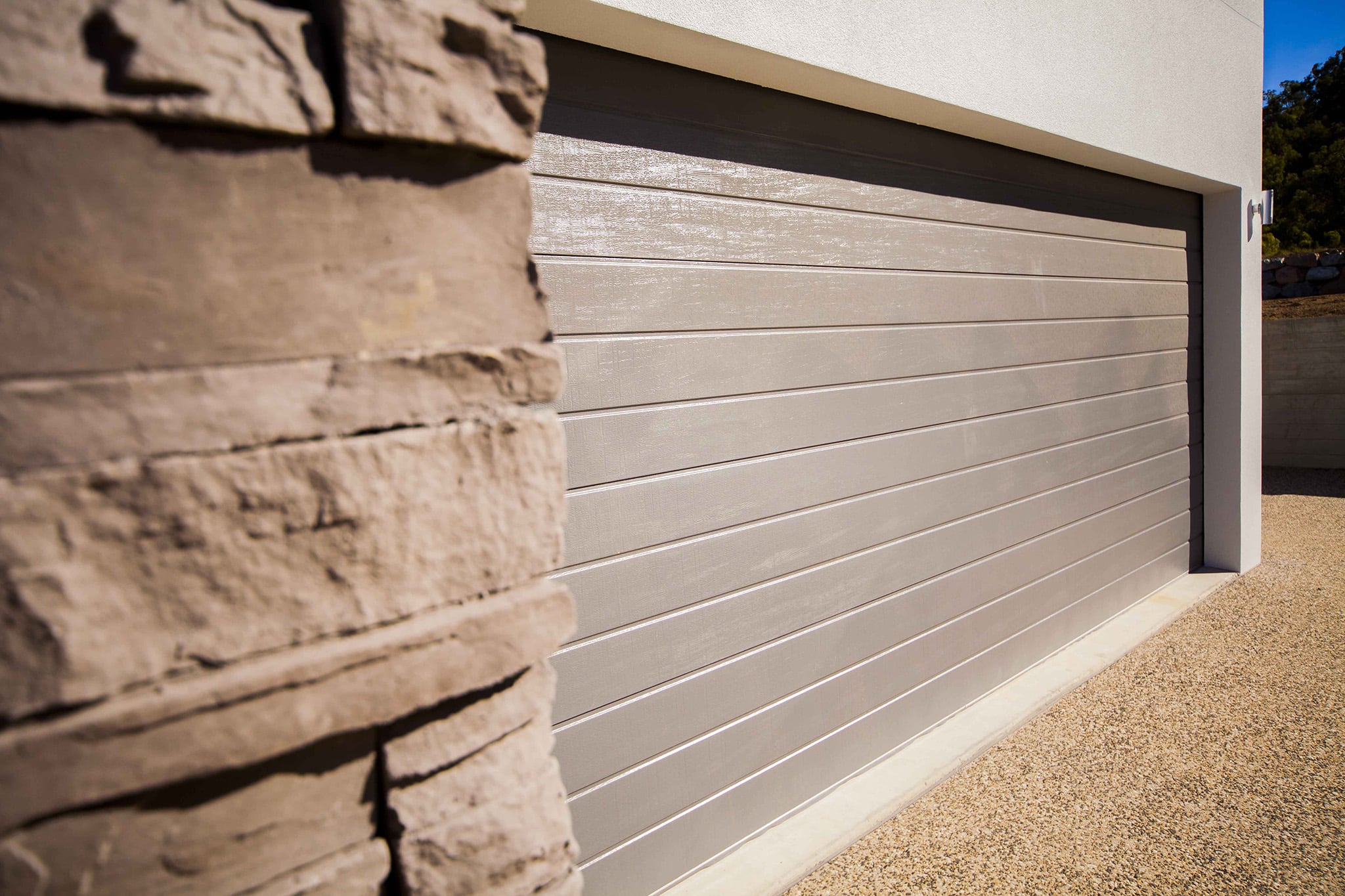
8 - Flush Mount design. Built using the same cladding as the rest of your house- timber, composite timber, aluminium or acrylic- so the door reads as part of the wall instead of a box bolted onto it. It’s the best option if your goal is to disguise the garage door within your home’s design.
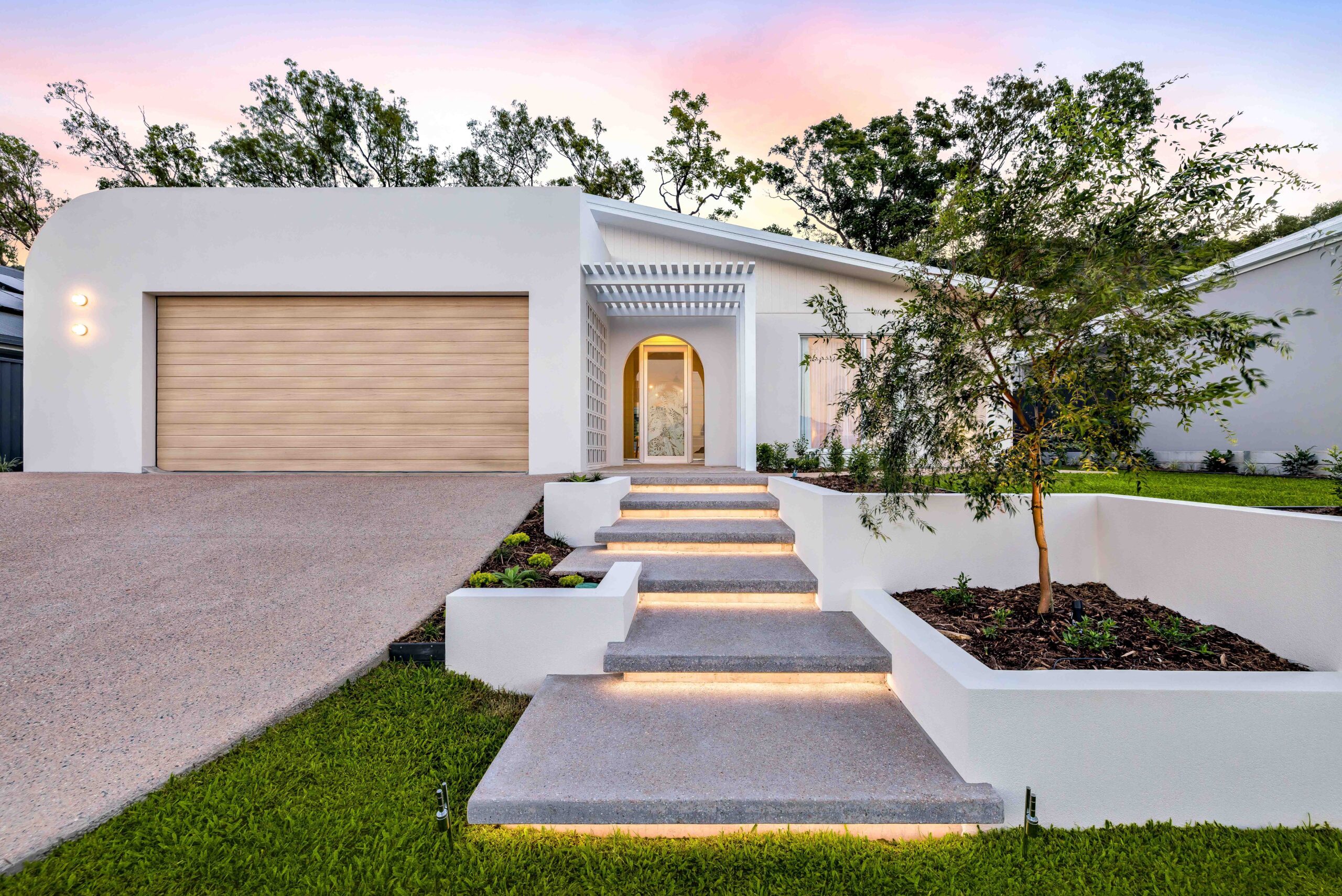
9 - Timber-look finishes. Woodgrain finishes in tones like dark oak, walnut, or teak give a similar effect to timber with a more consistent, low-maintenance surface. Both suit heritage homes and newer builds that want texture against extensive render or brick.
10 - Full-view and glass-effect panels. These use acrylic or polycarbonate sections instead of solid panels to bring natural light into the garage and create a distinctly modern street presence. Frosted or tinted sections are available if you want the light without full transparency into the garage.
11 - Louvre-style doors. A horizontal, slatted profile that allows a meaningful amount of natural airflow through the door itself, while still reading as a deliberate architectural choice. Useful if your garage doubles as a workshop or storage space that benefits from ventilation.
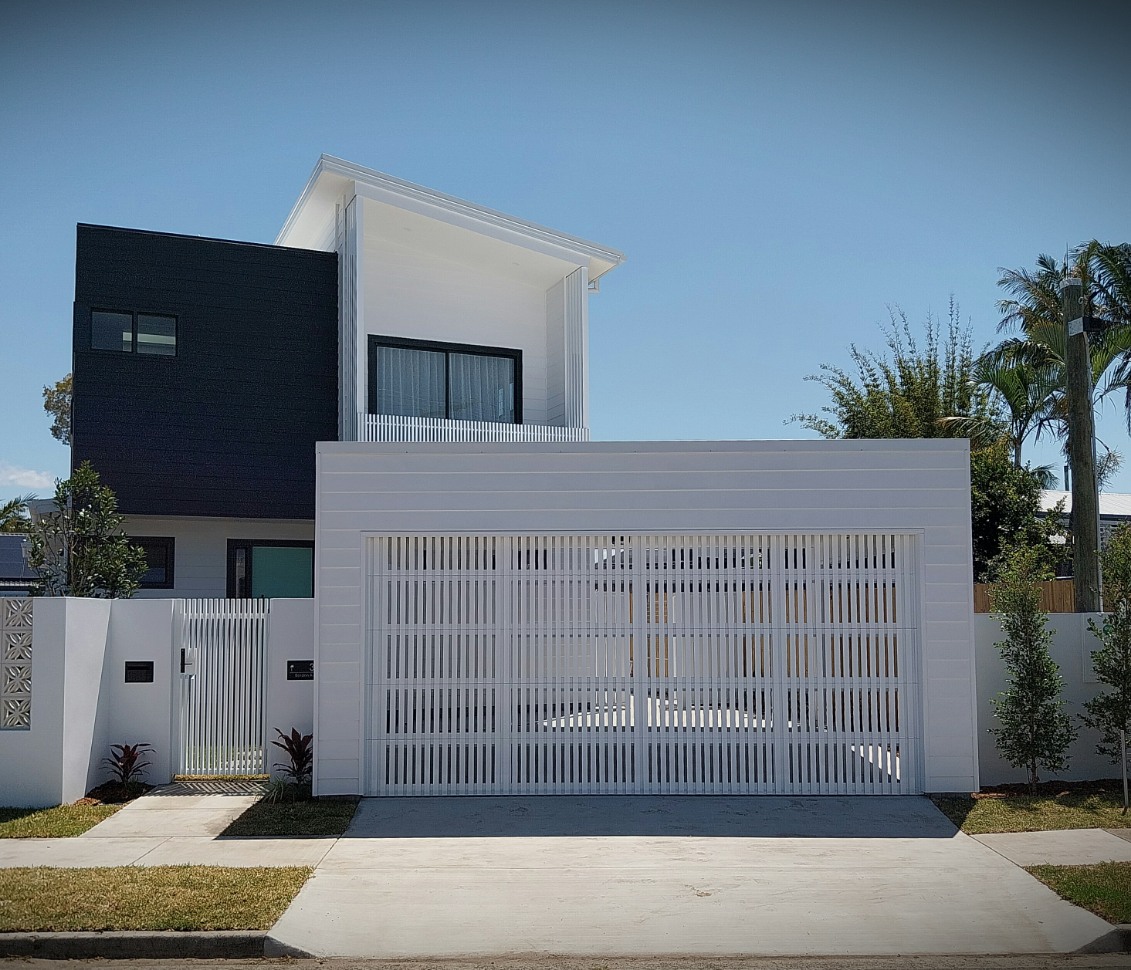
12 - Batten doors, vertical or horizontal. A linear, textured look that’s become increasingly common on newer builds. Vertical battens draw the eye upward and can help a lower garage feel taller. Horizontal battens work well on a wider façade and tend to sit well alongside brick or weatherboard cladding.
The right design changes depending on where you live. A finish that performs well in Sydney won’t necessarily match Darwin’s wet season or Perth’s salt air. Matching your material and finish to your local conditions matters as much as matching it to your house.
13 - Coastal exposure, including Perth. Salt-laden air travels further inland than most people expect. Local topography and prevailing weather patterns can carry it well beyond the beachfront, so homes several streets back from the water can still be affected. In these areas, ask about a material’s corrosion resistance before you settle on a look.
14 - Tropical humidity and storm season, including Darwin. The lead-in to the wet season, locally known as the build-up, brings months of rising heat and humidity. The wet season itself brings heavy monsoonal rain and regular storms. Ask about a wind-rated door for these regions, and look for finishes that don’t need constant upkeep in ongoing humidity.
15 - Cool, changeable conditions, including Hobart and Tasmania. Hobart is actually one of the drier Australian capitals overall. Its rain tends to fall often and lightly, and temperatures stay cool for most of the year. Insulation and moisture-resistant finishes still make sense here, for comfort in the garage and to protect anything stored inside it.
16 - Storm- and hail-prone regions. If your area experiences frequent severe weather, ask your installer how a finish holds up to impact. Some materials are naturally more forgiving of hail than others. Raise this at the design stage, before you’ve settled on a colour.
Beyond the door itself, more homeowners are designing the whole garage around how they actually use it: as a workshop, a storage room, a showcase space, or an entry zone.
17 - A workshop, without the shed. Wall-mounted pegboards for frequently used tools, a few extra power outlets and a proper workbench can turn an underused garage into a genuine workspace for hobbies, trades or garden equipment, without the footprint of a separate shed. Even a simple rack for garden tools near the door makes daily use easier.
18 - Storage for every season. Overhead racks free up floor space for gear you only need a few times a year: camping equipment, Christmas decorations, sporting kit. Floor-to-ceiling cabinets keep everyday clutter out of sight. Choose hard-wearing shelving and cabinetry over anything designed for indoor use, since a garage sees far more temperature swings and moisture than the rest of the house.
19 - A showcase space. If your car, bike, or another collection is your pride and joy, small changes go a long way: better flooring (an epoxy coating is a common upgrade), improved lighting, and a bit of decluttering. Together, they turn a garage from purely functional into a space you want to spend time in.
20 - A mud room or pet zone. A dedicated spot near the garage entry for muddy boots, wet coats, and bags keeps that mess out of the main house. If you’ve got dogs that come in from the garden or the beach, a simple wash-down area in this zone makes cleanup easier. A garage that’s tidy, dry, and free of drafts also gives an animal a genuinely comfortable spot to wait out bad weather.
A well-designed door still needs the right accessories and a bit of ongoing care to perform the way it looks like it should. Common additions include a brush seal, insulation, a smart opener, and a simple maintenance routine.
If your garage seems to collect a layer of dust no matter how often you sweep it, the gap around the door’s base and sides is usually the reason. A brush seal closes that gap without affecting how the door opens and closes. It’s a straightforward retrofit on most existing doors, so you don’t need a new door to add one.
Insulation does more than manage heat. It also cuts down on noise, which matters if your garage doubles as a workshop, home gym, or living space. It’s easier and tidier to build in at the design stage than to add later to an existing door.
If you’d like to control your garage door through an app or a compatible voice assistant, ask about Steel-Line’s smart controller options when choosing your opener. Compatibility and additional devices depend on the setup.
A garage door performs better for longer with basic upkeep: wipe it down occasionally with mild soap and water, keep tracks clear of leaves and debris, and periodically check moving parts and hardware. It’s a small habit that protects the design you’ve just invested in.
Start with what matters most for your home: colour and style. From there, consider the door type, material, and finish, while keeping your local climate, garage size, and how you plan to use the space in mind.
The best garage door design isn’t necessarily the most eye-catching. It’s the one that works with your home’s architecture, meets your climate needs, and complements how you use your garage. You don’t need to act on all 20 ideas at once.
Steel-Line Garage Doors has designed and manufactured garage doors in Australia for more than 45 years, with doors made locally in Brisbane and Perth and an owned network of 22 branches from Sydney and Melbourne through to Darwin and Hobart. More than 2,500 Australian builders use Steel-Line doors, including 71 of the Housing Industry Association’s Top 100 builders. If you need garage door advice, call Steel Line Garage Doors on 1300 767 900.
Before you settle on a colour or finish, use Steel Line Garage Doors’ online Garage Door Visualiser to see how different styles will actually look on your home. For sizing, materials, and custom options specific to your build, request a free measure and quote here.
Right now, the biggest shift is toward doors that read as part of the home’s architecture instead of a separate box on the front of it. Flush-mount designs, timber-look finishes, and vertical batten profiles all lean this way. There’s also growing interest in full-view and glass-effect panels that bring natural light into the garage itself.
If a new door isn’t on the cards yet, a fresh coat of an approved finish in a colour that matches your home, updated window inserts or hardware, and a brush seal (which also stops the door from looking grubby from built-up dust) can all make a noticeable difference on their own.
Flush Mount doors are the most effective option. They’re built from the same cladding materials as the rest of your home, timber, composite or aluminium, so the door reads as part of the wall instead of a separate element.
At a minimum, a garage door design should suit your home’s style and local climate; the door itself should be in good working order, and there should be enough storage or shelving to keep the space usable instead of cluttered. Beyond that, it depends on how you actually use the garage: a workshop, a storage room, or simply somewhere to park the car.
Discover the perfect door for your home and enjoy peace of mind with the experts in garage doors.